Istanbul has always been a city where history and modern life meet in unexpected ways.
One moment, you’re walking past a centuries-old Ottoman building, and the next, you’re standing inside a stylish hotel filled with contemporary furniture, peaceful lighting, and beautifully designed wellness facilities.
This fascinating contrast is becoming increasingly important in the city’s hospitality scene.
Architectural design trends shaping Istanbul’s boutique spa hotels are transforming historic mansions, former industrial buildings, and intimate urban properties into relaxing spaces that offer much more than somewhere comfortable to sleep.
Today’s travelers aren’t simply looking for expensive rooms or impressive swimming pools. They want meaningful experiences, authentic surroundings, personalized wellness services, and interiors that make them feel connected to their destination.
That’s exactly where Istanbul’s architectural character creates an advantage.
From traditional Turkish hammams reimagined with minimalist details to waterfront retreats featuring natural materials and carefully restored heritage features, the city offers exciting inspiration for modern hospitality design.
Let’s explore the architectural ideas influencing these distinctive properties and discover why Istanbul’s boutique wellness hotels are becoming such interesting examples of design-led luxury.
1. Adaptive Reuse: Transforming Historic Buildings Into Wellness Retreats
One of the most interesting architectural directions in Istanbul’s boutique hospitality scene is adaptive reuse.
Rather than demolishing an older structure and constructing an entirely new hotel, architects transform existing buildings into modern spaces while protecting their architectural identity.
This approach feels particularly appropriate in Istanbul, where historic buildings form an essential part of the city’s visual character.
Restoring Ottoman Mansions With Modern Comfort
Many historic properties feature tall ceilings, elaborate plasterwork, timber details, decorative windows, and carefully proportioned rooms. These characteristics provide an attractive foundation for intimate hospitality experiences.
Kocataş Mansions in Sarıyer demonstrates how restored Ottoman residences can support contemporary luxury accommodation.
Originally associated with the Six Senses brand and now operating under the Kocataş Mansions name, the property occupies two historic mansions overlooking the Bosphorus.
Its design brings together heritage architecture, landscaped surroundings, and modern wellness facilities. Instead of replacing the buildings’ original identity, the project uses their historical character as an important part of the guest experience.
A different example is Vakko Hotel & Residence Sumahan Bosphorus in Çengelköy. The property occupies a former 19th-century Ottoman distillery that previously operated as Sumahan on the Water.
Its transformation shows how industrial architecture can become an intimate waterfront hotel. Historic character, contemporary interior design, and carefully framed Bosphorus views create an environment that feels distinctive without requiring an entirely new architectural identity.
Why Adaptive Reuse Matters
Reusing historic buildings can preserve important cultural landmarks while reducing the need for entirely new construction. However, the environmental benefits depend on the actual renovation materials, energy systems, and long-term building performance.
For hotel guests, the appeal is often more immediate. Staying inside a restored mansion or former industrial property offers a sense of place that a conventional modern building may struggle to replicate.
2. Contemporary Ottoman Design: Balancing Tradition and Minimalism
Ottoman architecture has influenced Istanbul’s buildings for centuries, particularly through its distinctive arches, domes, courtyards, decorative surfaces, and spatial arrangements.
Modern boutique spa hotels increasingly reinterpret these elements rather than simply reproducing historical interiors.
Reimagining Traditional Architectural Details
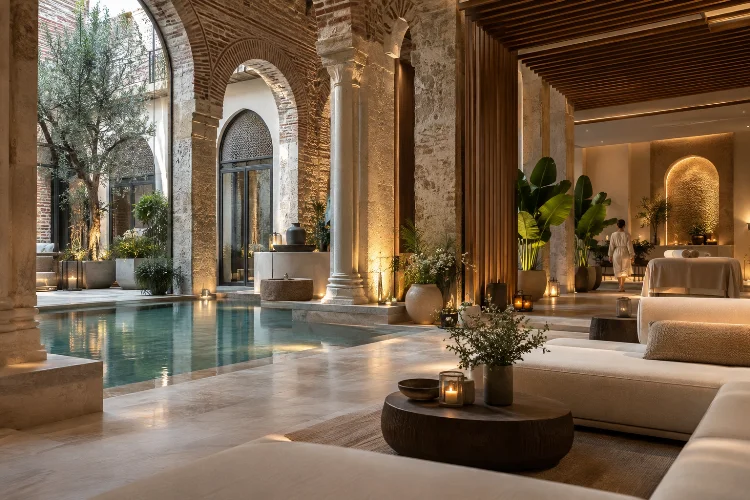
A contemporary Ottoman-inspired interior might include curved openings, geometric tile patterns, carved wooden screens, and elegant marble surfaces. However, these features often appear alongside minimalist furniture and restrained color schemes.
Instead of filling every wall with decoration, designers may highlight a single traditional architectural feature. A patterned tile wall, sculptural basin, or beautifully proportioned arch can establish a cultural connection without overwhelming the room.
This selective approach helps historic influences feel relevant to contemporary travelers.
The Bank Hotel Istanbul in Karaköy offers an interesting example of how historical architecture and modern aesthetics can work together. Located inside a former bank building, the hotel was restored under architect Han Tümertekin, with interiors by Sinan Kafadar.
Historic marble columns, ornamental details, and the original staircase coexist with contemporary furniture, artwork, and sophisticated color choices.
Although its architectural language reflects the building’s banking history rather than a traditional Ottoman bathhouse, the project demonstrates the broader design principle of respecting heritage while introducing modern hospitality functions.
Creating Luxury Without Excess
Contemporary boutique luxury often relies more on proportion, materials, and atmosphere than excessive ornamentation.
Imagine a spa reception featuring pale stone flooring, warm timber seating, a softly illuminated ceiling, and a single decorative ceramic installation. Every detail feels intentional, allowing guests to appreciate the setting without unnecessary visual distractions.
This balance between historical richness and modern simplicity is one of the most compelling directions in Istanbul’s hospitality interiors.
3. Natural Materials and Local Craftsmanship Are Defining Spa Interiors
Material selection plays an enormous role in how a hotel feels. Beautiful furniture certainly matters, but the surfaces guests touch, walk across, and see throughout the day can make an even stronger impression.
Istanbul’s architectural traditions offer plenty of inspiration through marble, natural stone, timber, ceramics, copper, and traditional textiles.
The Timeless Appeal of Turkish Marble
Marble has long been associated with Turkish bathing culture, making it an especially meaningful material for wellness spaces.
Its smooth texture, visual elegance, and ability to conduct heat make it useful in hammam environments. Traditional heated marble platforms, washing basins, and surrounding surfaces contribute directly to the bathing experience.
Modern spa designers can reinterpret these characteristics using contemporary stone finishes, simplified shapes, and carefully integrated lighting.
A pale marble treatment room, for example, can feel spacious and refined when paired with warm wooden details. Darker stone accents may create an intimate atmosphere in massage rooms or private relaxation suites.
Decorative Ceramics and Handcrafted Details
Traditional Turkish tiles provide another valuable source of inspiration. Their intricate patterns and distinctive colors can introduce cultural depth into otherwise minimalist interiors.
Instead of decorating an entire spa with elaborate motifs, designers might use ceramic tiles around a fountain, behind a reception desk, or inside a hammam.
Copper bowls, handcrafted lighting fixtures, textured fabrics, and timber screens can create additional layers of character.
The key is using these materials with care. Authencity comes from thoughtful connections to local culture, not simply adding decorative objects that look vaguely traditional.
For travelers, these details can turn a standard wellness treatment into something more closely connected to Istanbul itself.
4. Modern Hammam Architecture Is Becoming a Central Design Feature
Few architectural elements are more closely associated with Turkish wellness traditions than the hammam.
For centuries, traditional bathhouses have combined heat, water, marble, and carefully arranged interior spaces to create distinctive bathing rituals. Contemporary spa hotels are finding new ways to incorporate these experiences into modern hospitality design.
From Historic Bathhouses to Contemporary Wellness Suites
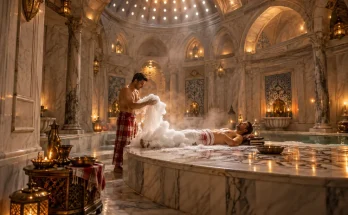
Traditional hammams generally feature a progression between different temperature zones, with the heated bathing area forming the center of the experience.
A raised marble platform, known as the göbek taşı, provides a place for washing and exfoliation. Water basins, known as kurna, and bowls used for rinsing complete the traditional arrangement.
Contemporary interpretations may incorporate private treatment rooms, improved temperature controls, discreet drainage systems, and softer lighting.
The challenge is preserving the atmosphere of a Turkish bath while meeting modern expectations for hygiene, accessibility, ventilation, and personal comfort.
One particularly interesting example is the Mula Hotel Narlı Building project in Sultanahmet, designed by Quark Studio Architects.
Completed in 2025, the adaptive reuse project transformed an existing building into an 11-room boutique hotel. According to the architecture studio, its guest-room designs integrate private Turkish hammams within the bathrooms.
This concept allows wellness to become part of the accommodation itself, rather than a separate facility guests must visit.
Private Wellness Is Influencing Hotel Layouts
Personalized bathing experiences are changing the way spa facilities can be arranged.
Instead of relying entirely on shared treatment zones, designers can create individual wellness suites with private steam showers, soaking tubs, massage areas, or hammam-inspired bathing spaces.
Privacy becomes part of the architectural experience. Carefully positioned doors, acoustic insulation, screened windows, and independent lighting controls can help guests feel comfortable and undisturbed.
For couples and travelers seeking intimate luxury, this approach creates a more personal alternative to the large communal spa.
5. Biophilic Design: Bringing Nature Into Istanbul’s Urban Hotels
Istanbul is energetic, crowded, and full of movement. That makes the relationship between architecture and nature especially important for hotels promising a peaceful atmosphere.
Biophilic design focuses on strengthening people’s connection with natural environments through vegetation, daylight, views, organic materials, and other sensory features.
Courtyards, Gardens, and Waterfront Views
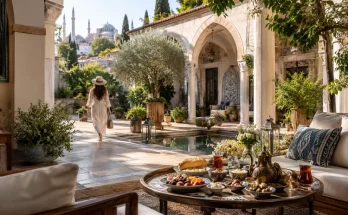
Historic Istanbul architecture already offers useful starting points for nature-focused design. Courtyards, gardens, shaded terraces, and waterfront residences have long been part of the city’s built environment.
Modern hotel designers can reinterpret these elements by creating small planted courtyards, secluded garden seating areas, and relaxation lounges positioned near natural light.
Kocataş Mansions provides an example of how historic architecture and landscaped surroundings can support an urban retreat.
Its garden setting and Bosphorus views contribute to the atmosphere beyond the treatment rooms. The property illustrates how landscape design can make wellness feel connected to the wider environment.
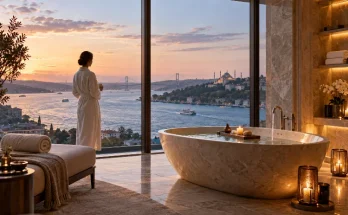
Along the Asian shore, Vakko Hotel Sumahan Bosphorus benefits from its remarkable waterfront position. Tall windows and carefully arranged interiors allow the scenery to become an important part of the visual experience.
Making Small Spaces Feel Naturally Restful
Not every boutique hotel has enough room for a large garden. Fortunately, nature-inspired design doesn’t always require extensive outdoor facilities.
Architects can introduce daylight through carefully placed windows, integrate greenery into internal courtyards, and use natural textures to soften compact interiors.
A small treatment room overlooking planted greenery may feel more peaceful than a much larger space without natural elements.
Water features, subtle planting, and outdoor seating can also create a pleasant seperation between the busy street and the quieter hotel environment.
The strongest designs treat these features as part of the building’s layout rather than decorations added at the final stage.
6. Sensory Architecture: Lighting, Acoustics, and Atmosphere
A beautiful spa should do more than look impressive in photographs. It should also feel comfortable when guests are actually using it.
That’s why sensory design has become an important consideration in wellness-focused hospitality architecture.
Lighting That Supports Different Experiences
Lighting affects the perceived warmth, intimacy, and visual comfort of an interior.
Bright, evenly distributed light may work well in changing rooms and circulation areas. Massage spaces, however, often benefit from adjustable lighting that allows guests to relax without harsh glare.
Some designers combine concealed LED strips, indirect wall lighting, and carefully positioned ceiling fixtures to create a subtel transition between spaces.
Park Hyatt Istanbul Maçka Palas offers a useful design precedent. According to GKV Architects, its renovation incorporated custom color-therapy lighting in spa treatment rooms alongside Turkish bathing facilities and modern wellness features.
This approach demonstrates how lighting can become part of the overall treatment environment rather than simply illuminating the room.
Sound and Spatial Privacy
Acoustic comfort is equally important, particularly in a busy city such as Istanbul.
Historic buildings may have thick masonry walls, but noise can still travel through doors, floors, ventilation systems, and internal corridors.
Designers can improve privacy through acoustic doors, appropriate wall assemblies, soft furnishings outside wet areas, and thoughtful separation between social spaces and treatment rooms.
The sound of gently moving water may also contribute to a calm atmosphere when integrated carefully. However, it should never become so loud that it interferes with rest or conversation.
Ultimately, sensory architecture works best when lighting, sound, temperature, and materials support one another.
7. Sustainable Architecture and Energy-Efficient Wellness Design
Sustainability is increasingly important in hospitality architecture, but spa hotels face some particularly demanding challenges.
Heated pools, steam rooms, saunas, hot-water systems, ventilation, and laundry operations can consume substantial energy and water. Creating a responsible wellness property therefore requires more than adding plants or selecting neutral-colored furniture.
Improving Existing Buildings Instead of Replacing Them
Adaptive reuse can support sustainable development by extending the useful life of existing structures.
A 2026 study published in the journal Sustainability examined historic waterfront hotels along Istanbul’s Bosphorus, including Kocataş Mansions and the original Sumahan on the Water property.
The research emphasized that successful adaptive reuse depends on more than preserving physical building features. Architectural atmosphere, historical identity, spatial experience, and connections with the surrounding environment also matter.
This suggests that sustainable heritage hospitality should consider both building performance and cultural value.
Smarter Energy and Water Systems
Modern boutique spa projects can reduce their environmental impact through efficient hot-water equipment, well-insulated service pipes, heat-recovery systems, and appropriately controlled ventilation.
Water-saving fixtures and carefully managed cleaning systems can also help reduce consumption without compromising basic hygiene or guest comfort.
For historic properties, upgrades may require sensitive installation methods to avoid damaging protected architectural elements.
Smart building controls can adjust lighting and mechanical systems according to actual occupancy, although their effectiveness depends on careful design and ongoing maintenance.
Sustainability also extends to procurement. Durable furniture, repairable fittings, responsibly sourced materials, and local craftsmanship can help reduce unnecessary replacements.
These measures are not automatically present in every boutique spa hotel. Travelers who prioritize environmental responsibility should look for specific, independently verifiable practices rather than relying only on marketing language.
8. Personalized Architecture Is Redefining Boutique Hotel Luxury
The final major trend is the movement toward more individualized hospitality experiences.
Rather than designing every guest room and public area in the same way, boutique hotels can use their smaller scale to create spaces with distinctive identities.
Rooms Designed Around Individual Experiences
A wellness-oriented guest room might include a quiet sitting corner, adjustable lighting, carefully chosen textiles, and a bathroom designed for extended relaxation.
Another room could feature a private terrace or an impressive water view.
These variations help guests select accommodation according to the experience they want, rather than simply choosing a standard room category.
The Mula Hotel Narlı Building project demonstrates this approach through several room configurations and integrated hammam facilities.
Meanwhile, Vakko Hotel Sumahan Bosphorus combines heritage architecture with a limited collection of waterfront rooms and suites. Its historic setting, marble bathrooms, and private bathing options help define an intimate hotel experience.
Creating a Journey Through the Building
Good boutique hotel architecture also considers how guests move between spaces.
The journey might begin with a relatively lively street entrance, followed by a quieter reception area, a softly illuminated corridor, and a peaceful treatment room.
This gradual change in atmosphere creates a natural transition from urban activity to relaxation.
Thoughtful wayfinding, comfortable seating, and discreet service circulation can make that journey feel effortless.
In smaller historic properties, designers must work particularly hard to achieve this balance because existing walls, staircases, and room proportions often limit major structural changes.
What Travelers Should Look for When Booking
Design-conscious visitors should look beyond polished promotional photographs.
Consider whether guest rooms receive natural daylight, whether treatment areas offer genuine privacy, and whether shared facilities feel comfortable rather than overcrowded.
If wellness is your priority, ask whether the hammam is private or communal and whether treatments are included in the room rate.
Also check if the building has elevators, accessible entrances, and convenient connections between bedrooms and spa facilities.
The most attractive boutique hotel isn’t necessarily the one with the most elaborate decorations. It’s the one where architecture, comfort, cultural identity, and practical convenience work naturally together.
9. The Future of Boutique Spa Hotel Architecture in Istanbul
Looking ahead, Istanbul’s architectural diversity provides considerable potential for creative wellness hospitality projects.
Historic mansions, former commercial buildings, industrial properties, and compact urban structures all offer different opportunities for adaptive reuse.
Blending Heritage With Future Wellness Technology
Future projects may continue integrating contemporary wellness technology into historically sensitive environments.
Digital lighting controls, personalized room settings, improved air-quality management, and energy-efficient temperature systems can support guest comfort when implemented thoughtfully.
However, technology should remain discreet. Guests visiting an atmospheric Ottoman mansion generally want to appreciate the architecture, not feel surrounded by complicated digital interfaces.
The best approach is to make modern systems useful without allowing them to dominate the interior.
Smaller Spaces With Stronger Identities
There is also an opportunity for architects to explore more compact wellness concepts.
A small hotel doesn’t necessarily need a large swimming pool or an extensive treatment menu to offer an appealing experience. A beautifully designed hammam, a private relaxation courtyard, and comfortable guest rooms may provide a more coherent identity.
Neighborhood context will remain essential. A waterfront property in Çengelköy should not necessarily look or feel like a restored commercial building in Karaköy.
Each location has its own history, architectural proportions, and atmosphere.
Preserving those differences could help Istanbul’s boutique hospitality scene remain distinctive as contemporary wellness design continues to evolve.
Istanbul’s boutique spa hotels demonstrate how thoughtful architecture can transform a relaxing getaway into a memorable cultural experience.
From restored Ottoman mansions and former industrial buildings to private hammam suites, natural materials, biophilic interiors, and sophisticated lighting, today’s design approaches emphasize comfort without losing historical character.
The most successful projects balance contemporary expectations with the stories already embedded in their buildings. Sustainability, privacy, local craftsmanship, and carefully designed sensory experiences add further depth to this approach.
As travelers increasingly value distinctive surroundings, Istanbul has an opportunity to strengthen its reputation for heritage-inspired wellness hospitality.
Planning your next Istanbul escape? Explore design-focused boutique hotels, compare their architectural features and wellness facilities, and choose a property where the building itself becomes part of your travel experience.