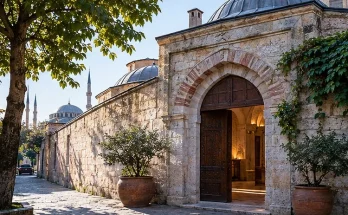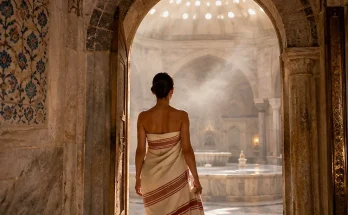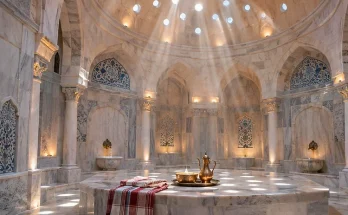
Imagine stepping into a magnificent Ottoman bathhouse in the heart of Istanbul. Warm marble surrounds you, sunlight filters through tiny openings in a domed ceiling, and the gentle sound of flowing water creates an atmosphere that feels completely removed from the busy streets outside.
For centuries, this was much more than a relaxing experience. It was an essential part of everyday life.
The cultural significance of traditional hammams in Ottoman Istanbul extends far beyond bathing and personal hygiene. These remarkable institutions brought together religion, architecture, social relationships, community traditions, and even economic activity.
During the Ottoman Empire, bathhouses became gathering places where people exchanged news, celebrated important milestones, maintained friendships, and followed customs passed down through generations.
They also reflected the sophistication of Ottoman urban planning and the importance placed on public cleanliness.
Today, Istanbul’s historic hammams continue attracting visitors fascinated by their architecture and cultural heritage. However, understanding what happened inside these buildings centuries ago reveals a much richer story.
Let’s explore how traditional Turkish bathhouses helped shape Ottoman society and why their cultural legacy remains relevant today.
1. The Origins of Hammam Culture in Ottoman Istanbul
The story of Istanbul’s traditional hammams begins long before the Ottoman Empire established control over Constantinople in 1453.
Public bathing was already deeply rooted in the Mediterranean world through Roman and Byzantine traditions.
From Roman Bathhouses to Ottoman Institutions
Ancient Roman bathhouses were designed for much more than washing. People visited them to socialize, relax, discuss public affairs, and participate in everyday urban life.
Byzantine Constantinople inherited aspects of this bathing culture, including heated rooms and sophisticated water systems.
When the Ottomans conquered the city, they gradually expanded and adapted existing bathing traditions.
Ottoman hammams incorporated earlier architectural knowledge while developing customs shaped by Islamic principles of cleanliness and privacy.
The result was a distinctive bathing culture that combined practical needs with religious and social expectations.
Why Public Bathhouses Became So Important
During much of the Ottoman period, many households lacked the facilities necessary for convenient bathing with heated water.
Public hammams provided access to washing areas, warm bathing chambers, and attendants who offered traditional cleansing services.
Their presence became particularly important in densely populated neighborhoods.
A well-maintained bathhouse could serve merchants, craftspeople, families, and other residents living nearby.
However, hammams weren’t identical across the city. Their size, facilities, clientele, and level of luxury varied according to location and patronage.
Some were relatively modest neighborhood establishments, while others were impressive architectural projects commissioned by members of the imperial elite.
This diversity made bathing an important feature of Istanbul’s developing urban identity.
2. Religious Cleanliness and Spiritual Significance
Religion played a central role in shaping Ottoman bathing customs.
Islam emphasizes personal cleanliness, and traditional hammams offered practical facilities for washing and full-body purification.
However, it’s important to distinguish ordinary bathing from specific religious rituals.
The Relationship Between Hammams and Islamic Purification
In Islamic practice, wudu refers to a prescribed form of ablution performed before prayer, while ghusl involves washing the entire body under particular circumstances.
Traditional bathhouses offered convenient environments for full-body washing when private facilities were limited.
This made hammams valuable within communities where religious observance influenced everyday routines.
However, not every hammam visit was a religious activity.
People also attended for hygiene, relaxation, social interaction, and personal grooming.
The relationship between religion and public bathing was therefore practical and cultural rather than exclusively ceremonial.
Bathhouses as Part of Religious and Charitable Complexes
Many Ottoman hammams were connected financially or spatially to mosques, schools, and charitable institutions.
These relationships were often organized through the vakıf system, an Islamic charitable endowment arrangement.
A bathhouse might generate income that helped maintain a mosque, educational institution, or another public service.
This meant that bathing facilities contributed to the broader welfare of the city.
The connection between hammams and charitable foundations also reveals how seriously Ottoman authorities and wealthy patrons considered public infrastructure.
Cleanliness wasn’t simply treated as an individual responsibility. Providing appropriate facilities could also become an important act of public service.
3. Hammams as Social and Community Gathering Places
One of the most fascinating aspects of Ottoman bathing culture was its social importance.
In many neighborhoods, the hammam functioned almost like a community center.
People visited for practical reasons but often stayed to talk, exchange information, and strengthen personal relationships.
Everyday Conversations and Social Connections
Imagine a busy Ottoman neigborhood where merchants were returning from markets and residents were discussing local events.
The public bathhouse offered a setting where people could meet outside their homes and workplaces.
Conversations could involve family matters, commercial news, political developments, or ordinary neighborhood gossip.
These informal exchanges helped hammams become part of the city’s social network.
Historian Ebru Boyar and researcher Kate Fleet, in A Social History of Ottoman Istanbul, describe the hammam as an important setting for social interaction and major life rituals.
Their work highlights how bathing establishments were closely connected to everyday relationships across different communities.
Women’s Social Lives Inside Ottoman Hammams
Traditional bathhouses were especially significant in women’s social lives.
In a society where social interactions were shaped by gender expectations, women’s bathing spaces could provide opportunities to meet friends, relatives, and acquaintances.
Some hammams contained separate bathing sections for men and women, while others operated according to different schedules.
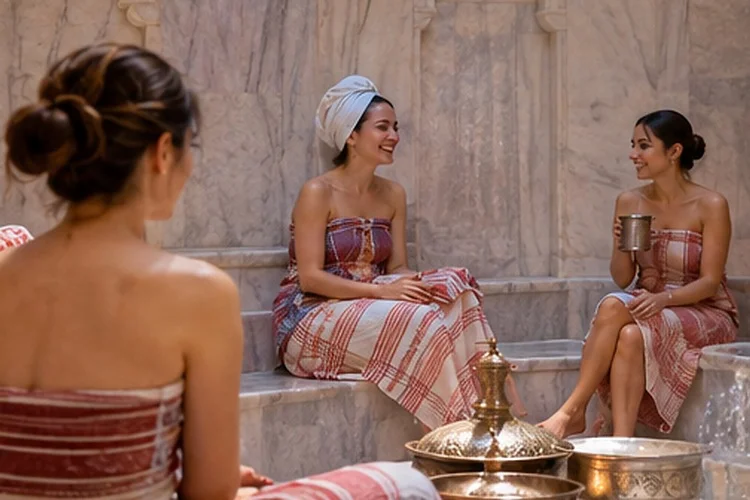
Within women’s sections, visitors could enjoy conversations, share experiences, and participate in celebrations.
These interactions sometimes helped families build connections and discuss potential marriages.
However, it would be misleading to describe every hammam as a completely unrestricted social space.
Women’s experiences were influenced by class, local customs, safety concerns, and broader social expectations.
Historical research based on Ottoman archival records also shows that some women encountered harassment or other difficulties when traveling to and from bathhouses.
The hammam offered meaningful opportunities for social participation, but these opportunities existed within the realities of Ottoman society.
Women as Hammam Business Owners
Women weren’t always simply customers.
Research published in Cihannüma Journal of History and Geography Studies examined inheritance records associated with eight women who operated hammams in 18th-century Istanbul.
This provides valuable evidence of women’s participation in the bathhouse economy.
Their involvement challenges the assumption that Ottoman urban business activities belonged exclusively to men.
Bathhouses could therefore represent both social spaces for women and opportunities for economic participation.
4. Traditional Hammam Rituals and Important Life Celebrations
Ottoman bathhouses were closely associated with major personal milestones.
Weddings, childbirth-related customs, and other important events could involve organized bathing ceremonies.
These traditions gave hammams emotional and symbolic meaning beyond their everyday function.
The Bridal Hammam Tradition
Perhaps the best-known example is the gelin hamamı, or bridal bath.
Before a wedding, a bride could visit a hammam accompanied by female relatives and friends.
The gathering might include bathing, music, food, conversation, and festive activities.
For the bride, this experience marked an important transition into married life.
For family members and friends, it offered an opportunity to celebrate and strengthen relationships.
Although wedding customs varied across households and social groups, the bridal bath became a recognizable feature of Ottoman cultural life.
Today, some Turkish hammams continue offering bridal gatherings inspired by this tradition.
Modern versions often include private reservations and spa-style services, but their historical roots remain visible.
Bathing Customs After Childbirth
Bathhouses also played roles in customs associated with the arrival of a child.
Historical accounts describe bathing rituals connected with a baby’s first outings, sometimes around the fortieth day after birth.
These practices could represent an important family milestone.
Their meaning depended on local customs, religious interpretations, and family circumstances.
Not every household followed precisely the same sequence of celebratons.
Still, such traditions demonstrate how bathing could become part of the social recognition of major life events.
More Than Physical Cleansing
What made these ceremonies distinctive was the combination of practical washing and symbolic transition.
A bridal bath wasn’t simply about preparing for a wedding.
It also created shared memories and marked changes in personal identity and family relationships.
In this sense, Ottoman hammams functioned as spaces where communities acknowledged important moments in people’s lives.
5. Ottoman Hammam Architecture as a Cultural Expression
Traditional hammam architecture is among the most recognizable aspects of Istanbul’s Ottoman heritage.
The impressive domes, marble platforms, water basins, and carefully arranged chambers weren’t just decorative.
They reflected practical engineering, social customs, and the artistic ambitions of Ottoman builders.
Understanding the Traditional Hammam Layout
A typical Ottoman hammam contained several areas designed for different stages of bathing.
Visitors generally entered through a changing and relaxation area known as the soyunmalık.
This space often featured seating, lockers or changing arrangements, and sometimes a decorative central fountain.
From there, bathers moved through an intermediate area, often called the ılıklık, before reaching the main hot chamber or sıcaklık.
Inside the heated bathing area, marble basins called kurna supplied water for washing.
Many hammams also featured a heated central marble platform known as the göbek taşı.
This arrangement allowed visitors to warm themselves, wash, receive traditional treatments, and gradually return to a comfortable temperature.
Domes, Marble, and Natural Lighting
Ottoman architects paid careful attention to heat, humidity, and lighting.
Small openings in domed ceilings allowed sunlight to enter while maintaining privacy.
The resulting patterns of light created a visually memorable bathing environment.
Marble surfaces provided durability and transferred warmth effectively.
Heating systems also required specialized engineering, including furnaces and channels designed to distribute heat through parts of the building.
These features demonstrate how architectural beauty and practical functionality worked together.
Mimar Sinan’s Influence
One of the most important figures associated with Ottoman bathhouse architechture was Mimar Sinan, the celebrated imperial architect of the 16th century.
His work helped define the architectural character of classical Ottoman Istanbul.
The Hürrem Sultan Hammam, constructed in 1556–1557, was commissioned by Hürrem Sultan, the wife of Sultan Süleyman the Magnificent.
Located near Hagia Sophia, the building features a distinctive double-hammam arrangement.
Another notable example is Kılıç Ali Paşa Hamamı in Tophane, constructed between 1578 and 1580.
Its main dome measures approximately 14 meters in diameter and rises around 17 meters high.
These historic buildings illustrate how public bathing facilities could become sophisticated architectural landmarks.
6. Economic Importance and Imperial Patronage of Hammams
Beyond their social and cultural roles, hammams were important contributors to Istanbul’s urban economy.
Their construction, operation, and maintenance required substantial financial resources.
They also supported numerous occupations and charitable institutions.
Hammams and the Ottoman Vakıf System
The vakıf system allowed wealthy patrons to dedicate property or income toward charitable purposes.
Revenue-producing buildings, including bathhouses, could provide financial support for religious and educational establishments.
One particularly interesting example is Çemberlitaş Hamamı.
Completed in 1584, the bathhouse was endowed by Nurbanu Sultan, the wife of Sultan Selim II and mother of Sultan Murad III.
Its income helped support the Valide-i Atik charitable complex in Üsküdar.
This arrangement demonstrates how a commercial bathing establishment could finance services elsewhere in the city.
Visitors paid for bathing facilities, while the associated endowment helped maintain broader public institutions.
Cağaloğlu Hamamı and Educational Patronage
Cağaloğlu Hamamı offers another example of the relationship between bathing and charitable financing.
Built under Sultan Mahmud I in 1741, the establishment was intended to generate revenue for the library associated with Hagia Sophia.
The building’s history illustrates how Ottoman rulers could use profitable urban facilities to support cultural and educational initiatives.
It also reflects the importance of bathhouses in Istanbul’s architectural development during the 18th century.
Rather than functioning as isolated commercial businesses, some hammams were integrated into larger systems of institutional funding.
Employment and Local Economic Activity
Operating a traditional bathhouse required more than attendants who washed customers.
Workers were needed to maintain heating systems, manage water supplies, clean facilities, handle payments, and maintain the building.
Other occupations benefited indirectly through the production and sale of soap, towels, bathing accessories, and heating fuel.
The construction and maintenance of large bathhouses also generated work for builders and skilled craftspeople.
These activities connected hammams to Istanbul’s wider commercial economy.
The exact scale of employment varied considerably, but bathhouses were clearly more complex than simple washing rooms.
7. The Lasting Legacy of Traditional Hammams in Modern Istanbul
Although Ottoman society changed dramatically over the centuries, its historic bathhouses didn’t simply disappear.
Some continued operating, while others were restored, repurposed, or eventually incorporated into the modern tourism economy.
From Public Necessity to Cultural Heritage
As private bathrooms and modern plumbing became more widespread, the practical need for public bathing declined.
Hammams increasingly competed with other forms of personal care and recreation.
However, their distinctive architecture and traditional rituals helped many establishments maintain cultural significance.
Çemberlitaş Hamamı, established in 1584, offers a fascinating example of this transformation.
Historical research by Nina Macaraig examines how the bathhouse’s function and meaning evolved through Ottoman, Republican, and contemporary periods.
Its story reveals that cultural heritage isn’t necessarily static.
Buildings can acquire new purposes while maintaining connections with earlier traditions.
Restoration and the Challenges of Preservation
Restoring a historic hammam involves more than repairing walls and replacing damaged marble.
Conservation teams must consider original materials, heating systems, water management, architectural details, and the building’s historical character.
Modern visitor expectations can create additional challenges.
Tourists may want comfortable changing rooms, convenient reservations, or luxury treatment packages.
While these improvements can support commercial sustainability, inappropriate modifications may weaken a historic building’s authenticity.
Successful restoration balances practical operation with respect for architectural heritage.
What Modern Visitors Can Learn
Experiencing a historic hammam can provide insights that ordinary sightseeing rarely offers.
Visitors encounter traditional bathing methods while observing the spatial arrangements that shaped Ottoman social customs.
The separation of bathing areas, use of marble, distribution of water, and design of changing spaces all reveal something about historical daily life.
For travelers exploring Istanbul, understanding this background makes the experience more meaningful.
Instead of viewing the hammam as simply an old-fashioned spa, it becomes easier to appreciate its connections to religion, social relationships, architecture, and local economics.
Keeping Cultural Traditions Alive
Preserving hammam culture also means maintaining traditional skills and knowledge.
Experienced attendants continue practicing bathing techniques that have been passed through generations.
These include the use of kese exfoliation mitts, foam-washing methods, and traditional water-pouring techniques.
While contemporary treatments sometimes incorporate additional products and services, the historical foundation remains recognizable.
This continuity helps keep Istanbul’s bathing heritage relevant in a city that continues to evolve.
It also reminds visitors that the cultural value of a hammam lies not only in its beautiful building but also in the people, practices, and collective memories associated with it.
The cultural significance of traditional hammams in Ottoman Istanbul reaches far beyond personal cleanliness.
These bathhouses played important roles in religious life, social interaction, family celebrations, architecture, charitable financing, and everyday urban activity.
They provided gathering places where relationships developed, traditions were celebrated, and practical needs were met.
Their buildings also demonstrate the creativity and technical achievements of Ottoman architects, while historical records reveal their importance within the city’s economic and social systems.
Today, surviving hammams continue connecting Istanbul’s modern identity with its Ottoman past.
Want to experience this remarkable heritage firsthand? Explore Istanbul’s historic bathhouses, learn about their architectural stories, and discover how centuries-old bathing customs continue shaping one of the city’s most fascinating cultural traditions.