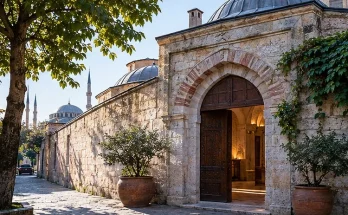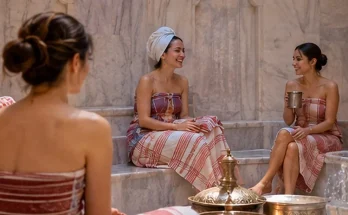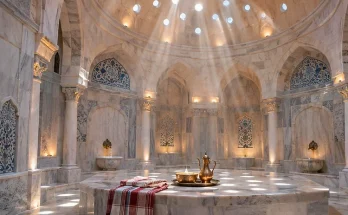
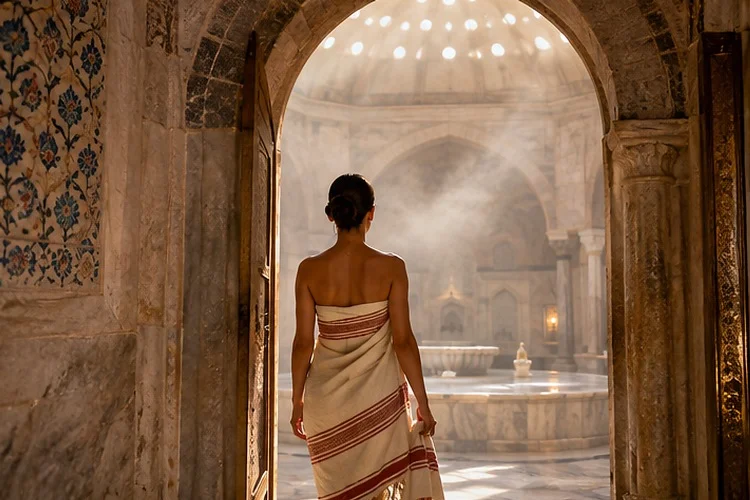
Imagine stepping into a centuries-old building where warm marble floors, softly glowing domes, and the gentle sound of running water create an atmosphere completely different from Istanbul’s busy streets.
There’s no complicated technology, no flashing screens, and certainly no rush. Just warmth, water, and a bathing ritual that has survived for generations.
That’s the enduring magic of the Turkish hammam.
The evolution of Ottoman hammams into modern Istanbul spa culture tells a fascinating story about how traditional communal bathhouses transformed into sophisticated wellness destinations.
What once served as essential public spaces for hygiene, social gatherings, and cultural celebrations now inspires luxury spa treatments, boutique wellness retreats, and internationally recognized hospitality experiences.
But this transformation isn’t simply about adding expensive massage oils or designer interiors.
It’s about preserving an important piece of Istanbul’s identity while responding to changing lifestyles, expectations, and tourism trends.
From magnificent 16th-century bathing complexes to contemporary hotel spas overlooking the Bosphorus, the city’s wellness culture continues to connect its past with the present.
Let’s explore how this remarkable tradition evolved and why it remains relevant today.
1. The Ancient Roots of Ottoman Hammam Culture
Although Turkish hammams are closely associated with the Ottoman Empire, their architectural and cultural foundations developed long before Ottoman rule.
Public bathing was already an established tradition across the Mediterranean during the Roman period. Roman bathhouses included heated chambers, changing rooms, and different bathing areas designed for cleansing, exercise, and social interaction.
When the Eastern Roman, or Byzantine, Empire continued these practices, public bathing remained an important element of urban life.
From Roman Baths to Ottoman Traditions
The Roman bathing system typically featured three temperature zones: the frigidarium for cold bathing, the tepidarium for warmer temperatures, and the caldarium for hot bathing.
These spaces influenced later bathhouse designs throughout the eastern Mediterranean.
As Islamic bathing practices developed, public baths adapted to new religious, cultural, and social expectations, including the importance of washing and bodily cleanliness.
Ottoman bathhouses eventually combined architectural elements inherited from earlier civilizations with distinctive Turkish customs.
Unlike many Roman bathing complexes, Ottoman hammams generally emphasized warm marble surfaces, running water, and intimate cleansing rituals rather than large communal swimming pools.
The Ottoman Golden Age of Hammams
During the 15th and 16th centuries, Ottoman Istanbul experienced major architectural development.
Public bathhouses became important elements of newly established neighborhoods, often constructed near mosques, markets, and residential communities.
Many were financed through charitable endowments known as waqf, which supported religious institutions and public services.
These establishments generated income while providing essential bathing facilities for local residents.
The famous Ottoman architect Mimar Sinan helped elevate hammam architecture through carefully proportioned spaces, impressive domes, and thoughtful arrangements of warm and hot bathing chambers.
His work contributed to the elegant visual language still associated with traditional Turkish baths.
2. Hammams as Social and Cultural Centers in Ottoman Istanbul
Modern visitors often associate hammams with relaxation and skincare, but their historical function was much broader.
During the Ottoman period, public bathhouses served as important community gathering places.
They were environments where people could interact, celebrate significant occasions, and temporarily escape daily responsibilities.
A Meeting Place for Communities
For many residents, visiting a neighborhood hammam was part of everyday life.
People gathered to exchange news, discuss local events, and maintain friendships while participating in bathing rituals.
Women’s bathing sessions held particular social importance.
According to research published by Cambridge University Press in A Social History of Ottoman Istanbul, hammams offered women opportunities to socialize beyond their immediate households.
These establishments also accommodated cultural gatherings associated with marriage, childbirth, and other important life events.
The bathhouse functioned almost like a combination of social club, beauty salon, and community center.
Bridal Hammams and Ceremonial Traditions
One of the most recognizable customs was the bridal hammam, traditionally organized before a wedding.
The bride would gather with female relatives and friends for a celebration involving bathing, conversation, music, and occasionally specially prepared refreshments.
The occasion symbolized preparation for a new stage of life.
Similar ceremonial bathing traditions marked other important transitions, including celebrations associated with newborn children.
Although these customs varied across communities and historical periods, they demonstrate how hammams extended beyond ordinary hygiene.
Today, some luxury bathhouses reinterpret bridal rituals as private group wellness experiences.
The modern format may include personalized treatments and celebratory arrangements, but its cultural inspiration remains closely connected to Ottoman social traditions.
3. How Ottoman Hammam Architecture Shaped the Wellness Experience
One reason historic hammams remain so captivating is their distinctive architecture.
Rather than treating the bathing environment as purely functional, Ottoman designers created buildings where temperature, sound, light, and materials worked together.
This approach feels surprisingly relevant to modern wellness design.
Understanding the Traditional Hammam Layout
A typical Ottoman bathhouse contained several interconnected spaces.
Visitors generally entered through the soğukluk, a cooler area used for changing and resting.
From there, they moved into the ılıklık, a moderately warm chamber that helped the body adjust before entering the hottest bathing space.
The main bathing chamber, known as the hararet or sıcaklık, contained marble basins, heated surfaces, and spaces for cleansing.
At the center, many hammams featured a large heated marble platform called the göbek taşı.
Guests rested on this platform before receiving exfoliation or foam washing.
Although layouts differed between buildings, the gradual movement through temperature zones remained a defining feature.
Marble, Domes, and Natural Light
Traditional hammams often used marble because it could withstand moisture, supported cleaning, and created elegant interior surfaces.
Domed ceilings helped shape the buildings’ impressive spatial character, while small openings allowed natural daylight to filter into the chambers.
These architectural features produced an atmosphere that could feel peaceful despite the practical purpose of the building.
The gentle echo of running water became another distinctive sensory element.
Modern spas frequently attempt to recreate similar effects through soft lighting, natural stone, ambient sound, and carefully controlled temperatures.
However, authentic historic hammams possess something newly built wellness centers cannot fully reproduce: the atmosphere of architecture that has accumulated centuries of human experience.
Mimar Sinan’s Architectural Legacy
Hürrem Sultan Hammam in Sultanahmet provides an outstanding example of Ottoman bathing architecture.
Commissioned by Hürrem Sultan, the wife of Sultan Suleiman the Magnificent, the hammam was designed by Mimar Sinan and built between 1556 and 1557.
Its innovative layout placed the men’s and women’s bathing sections along the same axis as mirrored arrangements.
The building illustrates how Ottoman architects combined practical requirements with sophisticated geometric organization.
Today, its preserved architectural character contributes significantly to its appeal as a heritage wellness destination.
4. Why Traditional Hammams Declined During Modernization
Despite their importance in Ottoman society, traditional public bathhouses gradually lost their central role as urban lifestyles changed.
The development of modern plumbing, private bathrooms, and domestic hot-water systems transformed how people approached personal hygiene.
Activities that once required a visit to a public facility became possible within the home.
The Rise of Private Bathrooms
Before modern household plumbing became widespread, public bathhouses offered an essential service.
Residents who lacked suitable bathing facilities relied on communal establishments for regular washing.
As private bathrooms became increasingly common, the practical necessity of visiting a hammam declined.
This shift was gradual rather than sudden, and the timing differed between neighborhoods and households.
Nevertheless, it fundamentally changed the economics of public bathing.
Maintaining large heated chambers required considerable fuel, water, labor, and building maintenance.
When fewer residents visited regularly, some historic establishments struggled to remain financially sustainable.
Changing Social Habits and Urban Development
Modernization also introduced new entertainment venues, changing leisure activities, and different expectations surrounding privacy.
Social interactions increasingly moved toward cafés, restaurants, shopping districts, and other public spaces.
Consequently, the hammam’s role as a central neighborhood meeting place became less prominent.
Some buildings closed, while others were adapted for different commercial purposes.
Hürrem Sultan Hammam, for example, ceased operating as a bathhouse in 1910 and subsequently experienced periods of alternative use.
Its later history included restoration and use as a carpet exhibition space.
This changing function reflects a broader challenge faced by many historic buildings: how to remain useful while preserving cultural significance.
5. The Restoration of Historic Hammams and Their Luxury Revival
As interest in architectural heritage and cultural tourism expanded, historic bathhouses gained renewed attention.
Rather than viewing these buildings simply as outdated public facilities, preservation specialists began emphasizing their artistic and historical value.
Restoration became an opportunity to reconnect Istanbul’s bathing traditions with contemporary audiences.
Kılıç Ali Paşa Hamamı: Bringing Ottoman Heritage Back to Life
Kılıç Ali Paşa Hamamı in Tophane is an excellent example of this transformation.
Designed by Mimar Sinan and constructed during the late 16th century, the building originally served members of the Ottoman maritime community.
Its monumental dome and carefully proportioned interior demonstrate the sophistication of classical Ottoman architecture.
Following seven years of extensive restoration, the hammam reopened in 2012.
The project combined traditional craftsmanship with carefully integrated modern improvements.
Conservation specialists worked to recover historical architectural elements while ensuring the building could function as a contemporary bathing establishment.
In 2017, the restoration received recognition through a European Heritage Award from Europa Nostra.
This achievement highlighted the potential of historic hammams to become active cultural spaces rather than static architectural monuments.
From Public Necessity to Premium Experience
Restored hammams often operate differently from their historical predecessors.
Instead of serving primarily as everyday hygiene facilities for local communities, many now attract travelers interested in cultural experiences and luxurious relaxation.
Services may include reservations, personalized attendants, premium skincare products, and carefully designed treatment packages.
This model can generate revenue needed to maintain expensive historic structures.
However, it also introduces a complicated question about accessibility.
When bathing rituals become luxury tourism products, prices may become less affordable for local residents.
The challenge is finding a balance between financial sustainability, historical preservation, and the hammam’s traditional community role.
A recent architectural study examining 81 listed historic hammams on Istanbul’s Historical Peninsula highlights the different ways these buildings have adapted to changing urban and cultural conditions.
Their evolution demonstrates that heritage conservation involves social practices as well as physical architecture.
6. How Traditional Hammam Rituals Became Modern Spa Treatments
Perhaps the most visible change in Istanbul’s bathing culture is the transformation of traditional cleansing into specialized wellness services.
The essential ritual remains recognizable, but contemporary establishments frequently offer additional treatments and personalized options.
The Traditional Kese and Foam Cleansing Ritual
A classic Turkish hammam experience usually begins with time spent warming the body.
The bather then receives exfoliation using a textured mitt called a kese.
This process removes surface skin buildup before the attendant applies generous amounts of soap foam.
The foam cleansing ritual typically involves gentle washing, rhythmic movements, and warm-water rinsing.
Afterward, guests can rest in a cooler area and enjoy refreshments.
Although the sequence may appear simple, its familiar sensory elements remain central to Turkish bathing culture.
Aromatherapy and Contemporary Skincare
Modern establishments often combine the traditional ritual with international spa practices.
Guests may choose aromatherapy massages, facial treatments, moisturizing body masks, or specialized skincare services.
These additions reflect contemporary consumer expectations rather than direct continuations of every historical Ottoman practice.
For example, Çukurcuma Hamamı 1831 offers traditional Turkish bathing alongside aromatherapy massage and extended wellness packages.
The establishment also operates as a mixed-gender hammam, allowing couples and friends to enjoy the main bathing ritual together.
This differs from the gender-separated bathing arrangements commonly associated with historical hammams.
It’s a clear example of how contemporary businesses reinterpret tradition to accomodate changing visitor preferences.
From Cleansing to a Complete Wellness Journey
Another major shift involves the way hammam experiences are marketed and structured.
Historically, the main purpose was bathing, even though relaxation and social interaction were important.
Today, treatments are often presented as carefully curated wellness journeys.
A guest might begin with warming and exfoliation, continue with a massage, and finish with tea in a peaceful lounge.
Packages emphasize relaxation, personal attention, and the overall experience.
The result combines traditional bathing techniques with modern hospitality, allowing an established cultural practice to reach new audiences.
7. The Rise of Luxury Hotel Spas Inspired by Ottoman Traditions
Istanbul’s international hospitality industry has played an important role in introducing hammam culture to travelers who might never visit a traditional neighborhood bathhouse.
Many luxury hotels now incorporate Ottoman-inspired bathing spaces into their wellness facilities.
These environments combine recognizable historical elements with contemporary comfort and professional spa management.
Traditional Hammams Inside Contemporary Hotels
The Peninsula Istanbul in Karaköy illustrates this approach.
Its modern wellness center features traditional Turkish hammams alongside private treatment rooms, saunas, relaxation areas, and specialized massage services.
The spa includes eight private treatment rooms, with two designed for couples.
Visitors can combine Turkish bathing rituals with aromatherapy and contemporary skincare treatments.
Unlike standalone historic hammams, such facilities provide a broader range of wellness options within the same building.
Guests can tailor their experience according to personal preferences without necessarily participating in the complete traditional bathing ceremony.
Why Modern Travelers Appreciate This Combination
International visitors often value convenience, predictable service standards, and personalized treatment options.
Luxury hotel spas respond to these expectations by providing structured appointments, carefully selected products, and comfortable facilities.
At the same time, Turkish bathing traditions give these establishments a distinctive local identity.
A hammam ritual in Istanbul feels more culturally connected to the destination than an ordinary massage offered in an otherwise similar hotel elsewhere.
This connection is an important part of the appeal.
Rather than replacing traditional hammams, modern hotel facilities have helped introduce some of their techniques to a wider international audience.
However, the experiences remain different.
A newly constructed spa can reproduce traditional design elements and treatments, but it doesn’t automatically carry the architectural history or community memories of an original Ottoman bathhouse.
8. What the Future Holds for Istanbul’s Hammam and Spa Culture
The future of Istanbul’s bathing culture will likely depend on how successfully businesses balance traditional practices with evolving customer expectations.
Historic hammams must remain financially viable, while contemporary wellness facilities need ways to distinguish themselves in an increasingly competitive hospitality market.
Cultural authenticity provides one important opportunity.
Heritage Preservation and Responsible Tourism
Preserving historic bathhouses requires more than restoring marble surfaces or repairing damaged domes.
Traditional bathing knowledge, skilled attendants, and established social customs also deserve attention.
Without these elements, a historic building risks becoming little more than an attractive backdrop for commercial services.
Responsible restoration should respect original architectural features while introducing necessary safety, accessibility, and operational improvements.
Water and energy use are particularly relevant considerations because heating traditional bathing spaces can require substantial resources.
Conservation projects and spa operators can explore more efficient systems without compromising the character of historic buildings.
Personalization Without Losing Authenticity
Future wellness experiences may offer greater customization, including flexible treatment lengths, private appointments, and gentler exfoliation options.
Yet personalization shouldn’t automatically mean abandoning established traditions.
The strongest experiences preserve recognizable elements such as the kese, marble bathing platforms, and traditional foam cleansing.
Modern additions work best when they complement those elements rather than disguising them.
Visitors also benefit from understanding the difference between historically established practices and newly designed wellness packages.
A treatment described as Ottoman-inspired may be enjoyable without necessarily reproducing an original historical ceremony.
Choosing an Authentic Hammam Experience Today
For travelers interested in experiencing Istanbul’s bathing heritage, the first decision is whether to visit a restored historic hammam or a contemporary luxury spa.
Traditional establishments such as Hürrem Sultan Hammam and Kılıç Ali Paşa Hamamı offer extraordinary architectural surroundings.
Boutique venues like Çukurcuma Hamamı demonstrate how restored bathing spaces can introduce more flexible modern services.
Meanwhile, hotel spas provide greater variety for visitors interested in massage, skincare, and additional leisure facilities.
Before booking, check treatment inclusions, gender arrangements, clothing rules, and appointment availability.
If you have sensitive skin, cardiovascular concerns, or difficulty tolerating heat, discuss appropriate precautions with a healthcare professional and the venue before participating.
Most importantly, give yourself enough time to enjoy the ritual without rushing.
Whether your chosen experience lasts 30 minutes or two hours, the most memorable part may simply be the opportunity to slow down, relax, and appreciate an enduring cultural tradition.
The evolution of Ottoman hammams into modern Istanbul spa culture reveals how a centuries-old bathing tradition can adapt without completely losing its identity.
What began as an essential part of urban hygiene and community life has gradually become a distinctive element of heritage tourism, luxury hospitality, and contemporary wellness.
Historic establishments preserve remarkable architecture and traditional cleansing rituals, while modern spas introduce personalized services and new opportunities for rejuvination.
Together, they demonstrate Istanbul’s ability to connect history with changing lifestyles.
Whether you’re fascinated by Ottoman architecture or simply looking for a relaxing cultural experience, exploring the city’s hammam tradition offers something genuinely special.
Ready to experience it yourself? Discover Istanbul’s historic bathhouses, compare their traditional and modern treatments, and make time for a wellness ritual that connects you with the city’s extraordinary past.