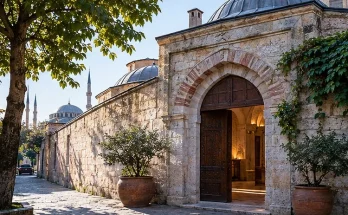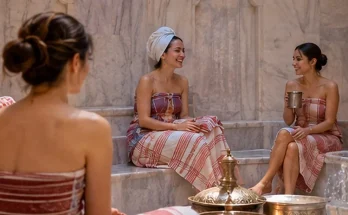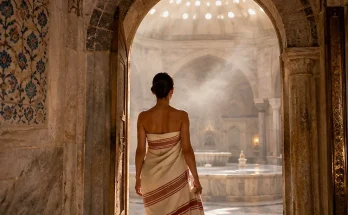
Imagine stepping through a centuries-old doorway, leaving Istanbul’s lively streets behind, and entering a magnificent marble chamber filled with warm air, gentle echoes, and soft light filtering through a beautiful Ottoman dome. Within minutes, the city’s constant movement feels surprisingly distant.
This is the timeless appeal of a traditional Turkish hammam.
Exploring historic Turkish bath rituals in Istanbul’s Old City offers much more than an ordinary spa treatment. It’s an opportunity to experience a cultural tradition that has shaped local social life, architecture, personal hygiene, and relaxation for generations.
From elegant bathhouses commissioned by Ottoman royalty to neighborhood hammams that once brought communities together, these spaces tell fascinating stories about Istanbul’s past.
The experience itself is equally memorable. Warm marble, traditional exfoliation, rich soap foam, and moments of peaceful relaxation create a bathing ceremony unlike most modern wellness treatments.
Whether you’re visiting Istanbul for the first time or returning to discover its cultural treasures, understanding the history and customs of Turkish bathing can transform a simple afternoon into one of your most rewarding travel experiences.
1. The Cultural Significance of Turkish Baths in Ottoman Istanbul
Turkish hammams have been part of Istanbul’s cultural landscape for centuries. Although their roots connect with Roman and Byzantine bathing traditions, they developed a distinctive identity during the Ottoman period.
Public bathhouses weren’t simply places where people washed themselves. They also served as gathering spaces where neighbors exchanged news, friends socialized, and families celebrated important milestones.
From Everyday Hygiene to Social Tradition
Before private bathrooms became common, visiting a public bath was an important part of maintaining personal cleanliness.
For many residents, the hammam provided access to heated water and bathing facilities that weren’t available at home. Over time, these practical spaces developed strong social and ceremonial roles.
Women traditionally gathered for special occasions, particularly before weddings. Bridal bathing celebrations, known as gelin hamamı, could involve music, refreshments, conversation, and elaborate preparations.
Men also used public baths for personal grooming, social gatherings, and moments of rest.
The social importance of these places helps explain why they appeared throughout Ottoman neighborhoods. A hammam could become an important part of community life, supporting both everyday routines and special celebrations.
The Connection Between Hammams and Ottoman Architecture
Many historic bathhouses were commissioned by sultans, royal family members, and wealthy patrons.
They often formed part of charitable foundations called vakıf. Revenue from bathing establishments could help finance mosques, schools, libraries, and other public institutions.
This relationship between bathing culture and philanthropy gave hammams a role beyond personal comfort.
In Istanbul’s Historic Peninsula, several remarkable examples remain in operation. Their architectural details reveal how carefully Ottoman builders considered heat, water, ventilation, privacy, and the movement of guests through different bathing areas.
2. Understanding the Architecture of an Authentic Ottoman Hammam
One of the most memorable parts of visiting a historic Turkish bath is experiencing its architecture from the inside.
Ottoman hammams were designed around a progression of spaces, each serving a particular purpose in the bathing ritual. Rather than entering one enormous steam room, guests traditionally moved through areas with different temperatures and functions.
The Three Main Bathing Areas
The soğukluk is commonly associated with the cooler entrance, changing, or resting section. Depending on the building’s historical layout, this area may include seating, lockers, and space for socializing.
The ılıklık provides a transition between cooler and hotter environments. It allows guests to adjust gradually before or after spending time in the main bathing chamber.
The sıcaklık is the hot section where much of the bathing experience takes place. Marble surfaces, washing basins, and carefully designed heating systems create a distinctive atmosphere.
At the center of many historic hammams stands the göbek taşı, a heated marble platform where visitors can rest and receive treatments.
Domes, Marble, and the Beauty of Natural Light
Traditional hammam ceilings frequently feature large domes decorated with small openings that allow daylight to enter.
These skylights create remarkable patterns across the marble surfaces while contributing to the architectural character of the interior.
Along the walls, marble basins called kurna provide water for washing and rinsing. Visitors use bowls to pour water over themselves rather than entering the basins.
Private bathing chambers, known as halvet, may also be arranged around the main room.
The combination of warm stone, flowing water, high ceilings, and filtered light gives historic hammams their distinctive atmosphere.
Even without elaborate decoration, these architectural elements make the bathing experience feel special.
3. The Traditional Turkish Bath Ritual: Step by Step
If you’ve never visited a hammam before, the experience might seem a little mysterious. Fortunately, the basic process is straightforward, and attendants at established bathhouses generally guide visitors through each stage.
Although individual establishments offer different packages, the traditional ritual usually follows a recognizable sequence.
Step 1: Preparing for Your Hammam Experience
Your visit begins in the changing area, where staff provide a peştemal, a lightweight cotton wrap traditionally worn during bathing.
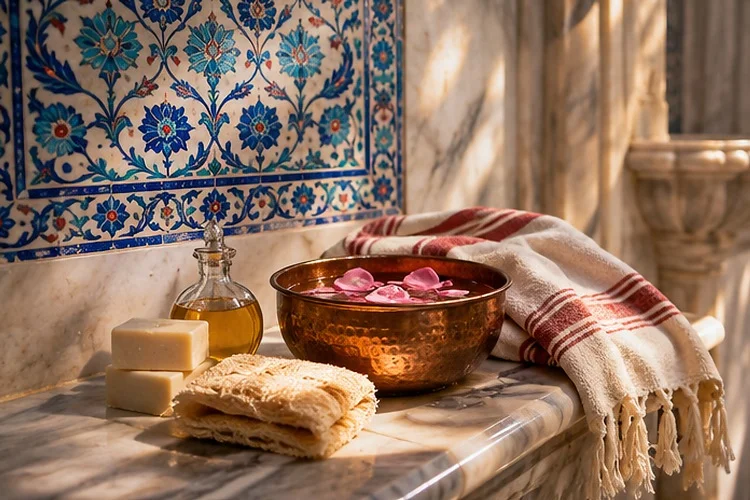
Most established hammams also provide towels, slippers, soap, and basic toiletries. Some offer disposable underwear or allow visitors to wear swimsuits beneath their wraps.
Once you’re ready, you’ll enter the bathing area and begin adjusting to the warmer temperature.
There’s no need to rush. The purpose of this first stage is to become comfortable with the environment before receiving any treatments.
Step 2: Relaxing on Heated Marble
The next stage usually involves spending time in the warm or hot room.
Guests may sit beside marble water basins or lie on the heated central platform. The warmth encourages perspiration and prepares the skin for exfoliation.
This is a good moment to appreciate the surrounding architecture. Look upward at the dome, notice the natural light, and enjoy the distinctive atmosphere created by marble and flowing water.
However, more heat isn’t necessarily better. If you feel uncomfortable, dizzy, or unusually tired, move to a cooler space and tell an attendant.
Step 3: Traditional Kese Exfoliation
The kese scrub is one of the defining elements of Turkish bathing culture.
A trained attendant uses a textured mitt to remove dead skin cells from the body’s surface. The technique can feel considerably firmer than the gentle exfoliation offered by many contemporary spas.
For first-time visitors, the sensation may be surprising.
The scrub should feel manageable rather than painful. If the pressure is uncomfortable, ask your attendant to be gentler.
After exfoliation, warm water is used to rinse away loosened skin cells and residue.
The result is often a noticeably smoother skin texture, although individual experiences vary depending on skin sensitivity and treatment intensity.
Step 4: The Famous Turkish Foam Massage
After the exfoliation comes one of the most enjoyable parts of the ceremony: the traditional soap-foam wash.
An attendant creates generous amounts of lather using soap and a special cloth or pouch. The foam is spread across the body before a washing and massage sequence.
The sensation is quite different from a conventional oil massage.
Instead of focusing entirely on deep muscle pressure, the treatment combines washing, gentle movements, and the feeling of soft bubbles against warm skin.
Olive oil-based soaps are commonly used in traditional bathing services, although specific products vary between establishments.
This stage provides a refreshing contrast to the more vigorous scrubbing process.
Step 5: Rinsing and Resting
Once the foam treatment is complete, the attendant rinses your body thoroughly with water.
You can then return to a cooler area, dry off, and spend time relaxing before changing into your clothes.
Some bathhouses provide Turkish tea, sherbet, water, or light refreshments after the ceremony.
This final stage shouldn’t be overlooked. Taking time to cool down gradually helps the visit feel like a complete wellness experience rather than a hurried appointment.
4. Historic Turkish Baths Worth Visiting in Istanbul’s Old City
Istanbul’s Historic Peninsula contains some of the country’s most fascinating surviving Ottoman bathhouses.
Each establishment offers a slightly different combination of architecture, history, hospitality, and traditional bathing treatments.
Ayasofya Hürrem Sultan Hamamı: A Royal Bathing Experience
Located between Hagia Sophia and the Blue Mosque, Ayasofya Hürrem Sultan Hamamı occupies one of Istanbul’s most remarkable historic settings.
The bathhouse was commissioned by Hürrem Sultan, wife of Sultan Süleyman the Magnificent, and designed by celebrated Ottoman architect Mimar Sinan during 1556–1557.
Its architectural design includes separate men’s and women’s sections arranged along the same axis, an unusual feature of classical Ottoman bathhouse planning.
Following a complex history of closure and alternative uses, the building was carefully restored and reopened for bathing in 2011.
Today, visitors can choose from several traditional treatment packages featuring exfoliation, foam washing, and optional luxury services.
The magnificent marble interiors and central location make it particularly appealing to travelers who want a refined introduction to Ottoman bathing culture.
Çemberlitaş Hamamı: A Living 16th-Century Landmark
Situated near the Grand Bazaar, Çemberlitaş Hamamı is another outstanding example of Istanbul’s historic bathhouse architecture.
Completed in 1584, it was commissioned by Nurbanu Sultan to help finance the Valide-i Atik charitable complex in Üsküdar.
The building is associated with Mimar Sinan and features a traditional double-hammam arrangement with separate bathing sections.
Its impressive domes, marble platforms, and carefully planned interior spaces offer visitors a direct connection with Ottoman architectural heritage.
The establishment offers bathing admission as well as treatments that include kese exfoliation and soap-foam washing.
For visitors exploring the Grand Bazaar and surrounding streets, its central location makes it a convenient cultural stop.
Cağaloğlu Hamamı: Ottoman Elegance From 1741
Cağaloğlu Hamamı is among the best-known historic bathhouses in Istanbul.
Constructed in 1741 under Sultan Mahmud I, it was designed to generate income for the library associated with Hagia Sophia.
Its architectural design includes elegant domes, marble columns, traditional bathing chambers, and richly atmospheric interior spaces.
Cağaloğlu is often described as one of the last major public hammams of its kind constructed during the Ottoman era.
Today, the establishment offers several bathing packages, ranging from traditional scrubbing and foam treatments to longer experiences incorporating additional massage services.
Men and women use separate sections, and the venue does not offer shared couples’ bathing sessions.
Zeyrek Çinili Hamam: Where Bathing Meets Archaeology
Located in the historic Zeyrek neighborhood, Zeyrek Çinili Hamam offers an especially fascinating combination of heritage and wellness.
Commissioned by Ottoman admiral Barbaros Hayreddin Pasha between approximately 1530 and 1540, the building was designed by Mimar Sinan.
Its original interiors featured extensive blue-and-white İznik tile decoration.
Following a lengthy restoration project, the complex reopened in 2023. Archaeological investigations uncovered important material remains, including Byzantine cisterns and thousands of historic tile fragments.
Today, visitors can enjoy traditional bathing rituals while also exploring a museum dedicated to hammam culture and the building’s layered history.
For travelers interested in archaeology, design, and traditional wellness, the complex provides a particularly memmorable experience.
5. Turkish Hammam Etiquette: What First-Time Visitors Should Know
Visiting a centuries-old bathhouse can feel intimidating if you’re unfamiliar with local customs.
However, most establishments welcoming international travelers provide clear instructions and assistance. Understanding a few basic expectations will help you feel more comfortable.
What Should You Wear?
The traditional bathing garment is the peştemal, usually wrapped around the waist or body.
Some guests wear underwear or swimwear underneath, depending on their comfort preferences and the rules of the establishment.
Always check the venue’s clothing requirements before arriving.
Avoid bringing expensive jewelry or unnecessary valuables into the bathing area. Secure lockers are commonly provided for personal belongings.
Respecting Privacy and Shared Spaces
Many historic Turkish bathhouses have separate facilities for men and women, although arrangements differ between establishments.
Bathing attendants are commonly called tellak for men and natır for women.
Guests should respect the privacy of other visitors and avoid taking photographs inside shared bathing areas unless the establishment explicitly permits them.
Keep conversations at a considerate volume and follow instructions from staff.
Remember that a traditional hammam is a shared cultural space, not simply a backdrop for holiday photographs.
Communicating With Your Attendant
Don’t hesitate to explain your preferences before a treatment begins.
If you have sensitive skin, an injury, or concerns about massage pressure, inform the attendant in advance.
You can also ask questions about the bathing process if anything feels unfamiliar.
A comfortable experience should never require enduring excessive pressure or uncomfortable heat.
Taking an unhuried approach makes it easier to enjoy each stage of the ceremony.
6. Wellness Benefits and Important Safety Considerations
Turkish hammams are often associated with relaxation, skincare, and physical comfort.
Warm surroundings and massage treatments may help people feel less tense, while traditional exfoliation removes dead surface skin cells.
However, these experiences should be understood as wellness practices rather than medical treatments.
Relaxation and Skincare
The combination of warm marble, quiet surroundings, and structured bathing can provide a welcome break from the demands of travel.
Many visitors particularly enjoy the contrast between the busy streets of Istanbul and the peaceful atmosphere inside a historic bathhouse.
Traditional exfoliation may leave the skin feeling smoother, but it can also cause irritation if performed too aggressively.
People with eczema, sunburn, open wounds, or highly sensitive skin should be especially cautious and may need to avoid scrubbing altogether.
Despite popular wellness marketing, sweating inside a hammam shouldn’t be confused with a medically proven detoxification treatment.
When to Avoid Excessive Heat
Hot, humid environments can place additional demands on the cardiovascular system and may cause dehydration or dizziness.
Pregnant visitors and people with certain medical conditions, including heart disease, unstable blood pressure, or respiratory problems, should seek medical advice before considering a hammam visit.
Some establishments also restrict services for particular health conditions.
Avoid visiting after drinking alcohol or consuming a heavy meal. Drinking water before and after your appointment is sensible.
If you feel lightheaded or uncomfortable, stop the treatment and move to a cooler area immediately.
7. Planning a Historic Hammam Experience Around Istanbul’s Old City
One of the greatest advantages of exploring Istanbul’s traditional bathhouses is their proximity to major historical attractions.
Instead of organizing an entire day around a single appointment, visitors can combine bathing traditions with architecture, museums, and neighborhood exploration.
A Relaxing Sultanahmet Itinerary
Begin your morning around Sultanahmet Square, where the Hagia Sophia and Blue Mosque create one of Istanbul’s most recognizable historic landscapes.
Spend time appreciating the architecture and walking through the surrounding streets.
Later, enjoy a pre-booked treatment at Ayasofya Hürrem Sultan Hamamı.
After your session, choose a nearby café or restaurant where you can enjoy a leisurely meal.
This itinerary offers an attractive balance of sightseeing, historical discovery, and relaxation without requiring complicated transportation.
Exploring the Grand Bazaar and Çemberlitaş
Another enjoyable route begins at the Grand Bazaar, where centuries of commercial history remain visible through its shops and passageways.
Browse traditional textiles, ceramics, jewelry, and decorative objects before continuing toward Çemberlitaş.
A hammam appointment provides a refreshing contrast to the market’s energetic atmosphere.
Afterward, spend time relaxing over Turkish tea or exploring nearby historic streets.
This approach allows visitors to combine two important elements of Ottoman urban culture: commerce and public bathing.
Discovering Zeyrek Beyond the Main Tourist Trail
For a quieter cultural itinerary, consider exploring Zeyrek.
Its winding streets, historic buildings, and layered urban heritage create a very different atmosphere from central Sultanahmet.
Begin with a relaxed neighborhood walk before visiting Zeyrek Çinili Hamam.
If available during your visit, explore the museum and archaeological displays associated with the complex.
Rather than filling the afternoon with additional sightseeing, leave time to appreciate the surrounding neigborhood at a comfortable pace.
8. Choosing the Right Turkish Bath Experience for Your Travel Style
Not every historic hammam offers the same atmosphere, services, or price structure.
Understanding these differences can help you choose an experience that matches your expectations.
Traditional Bathing or Luxury Wellness?
Some establishments focus on the classic bathing sequence of warming, exfoliation, foam washing, and relaxation.
Others provide extended packages featuring aromatherapy massages, skincare treatments, and additional hospitality services.
Neither approach is automatically more authentic or rewarding.
If you’re primarily interested in Ottoman history, choose a bathhouse with significant architectural heritage and informative cultural resources.
If personal comfort is your main priority, look for a venue offering clear treatment descriptions, private facilities where available, and personalized attention.
How Much Time Should You Allow?
Many hammam treatments last between 45 and 125 minutes, depending on the package.
However, the total visit can be longer when changing, preparation, and post-treatment relaxation are included.
For example, Zeyrek Çinili Hamam advises visitors to arrive 15 minutes early and allow at least 90 minutes for the complete bathing and resting experience.
A sensible approach is to reserve around two hours in your itinerary, with additional flexibility for longer treatments.
Booking and Budgeting Tips
Prices vary considerably between historic bathhouses.
Luxury establishments often charge more for longer rituals, exclusive products, additional massage services, and personalized hospitality.
Before booking, check what the advertised price includes.
Some packages cover only admission and basic bathing facilities, while others include professional exfoliation, foam massage, towels, refreshments, and additional treatments.
Advance reservations are recommended for popular establishments, particularly during weekends and busy travel periods.
It’s also worth reviewing cancellation policies, dress requirements, gender arrangements, and optional gratuities.
The most rewarding experience isn’t necessarily the most expensive. It’s the one that allows you to appreciate the cultural tradition while feeling relaxed and comfortable.
Historic Turkish baths offer one of the most distinctive cultural experiences available in Istanbul’s Old City.
Through warm marble chambers, traditional kese exfoliation, luxurious soap foam, and carefully preserved Ottoman architecture, visitors can discover a tradition that has connected generations of Istanbul residents.
From the royal elegance of Ayasofya Hürrem Sultan Hamamı to the historic beauty of Çemberlitaş, Cağaloğlu, and Zeyrek Çinili Hamam, each bathhouse tells its own fascinating story.
Understanding the rituals, cultural etiquette, and practical considerations makes the experience even more rewarding.
Ready to discover Istanbul’s bathing heritage? Choose a historic hammam, reserve a traditional treatment, and make time to appreciate the centuries-old customs that continue to shape one of Türkiye’s most memorable wellness traditions.